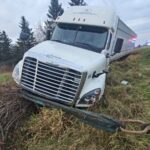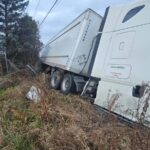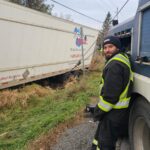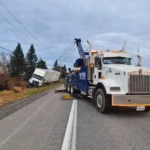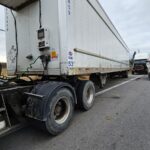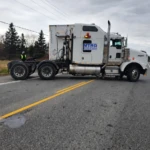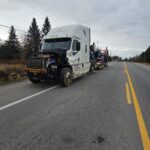
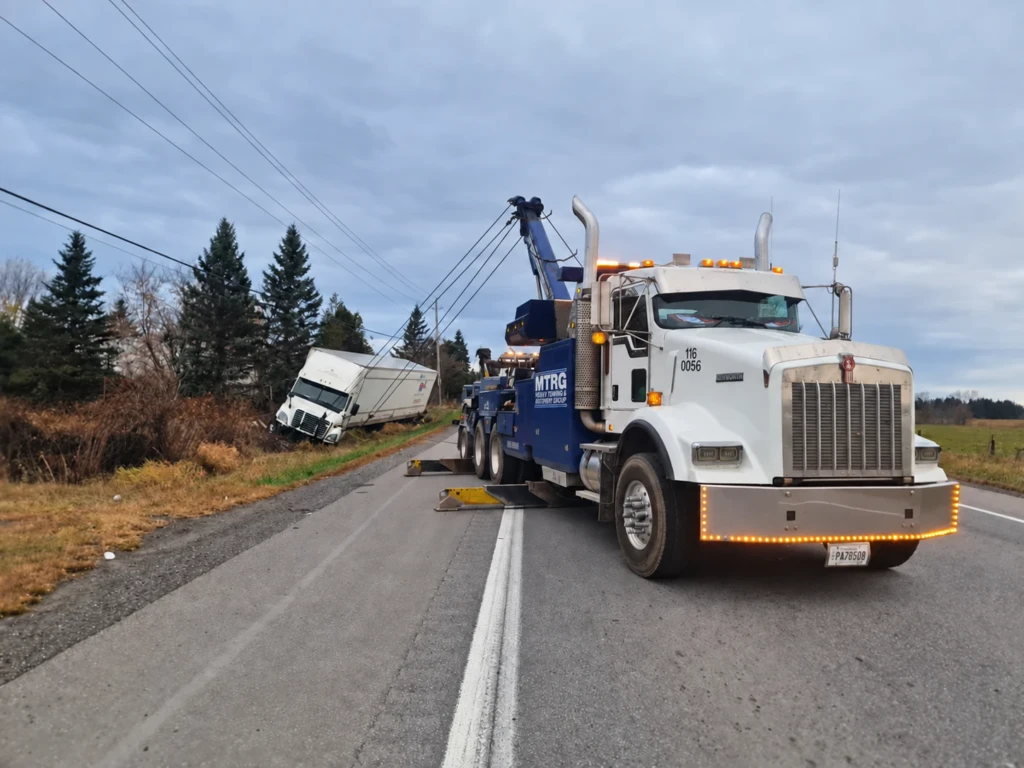
A tractor-trailer in a ditch presents more than a towing problem. The ground may be soft, the load may have shifted and the vehicle may have sustained damage that affects how it can be moved.
Assess Before Moving
The recovery team needs to understand the tractor and trailer, the cargo, the vehicle’s position and the surrounding area. A long trailer, a damaged front end or a steep bank can affect both equipment choice and the order of work.
Overhead lines and other utility hazards require special attention and coordination with the relevant utility and emergency authorities. These hazards should be reported immediately; bystanders should remain well clear and follow official instructions.
Plan a Controlled Recovery
Professional recovery may involve stabilizing the vehicle, managing its movement during extraction and positioning it for transport. Heavy wreckers, rotators or other equipment may be used according to the recovery plan and site conditions.
The aim is to control the load and limit additional damage while protecting people and the surroundings. Ground conditions, rigging, vehicle structure and communication between operators all matter throughout the work.
Share Useful Details When Calling
Tell dispatch the truck and trailer type, approximate load, location, vehicle position and known hazards. Photographs can help only when they can be taken from a safe place. Do not enter the recovery area or attempt to attach equipment yourself.
Metro Towing and Recovery Group can discuss heavy towing and recovery requirements and help coordinate the next step.